Research Interests

My work connects the synthesis of well-defined nanomaterials with their catalytic function, using advanced characterization to understand how catalyst structures form, function and degrade under reaction conditions.

Research 1. Nanoparticle Synthesis
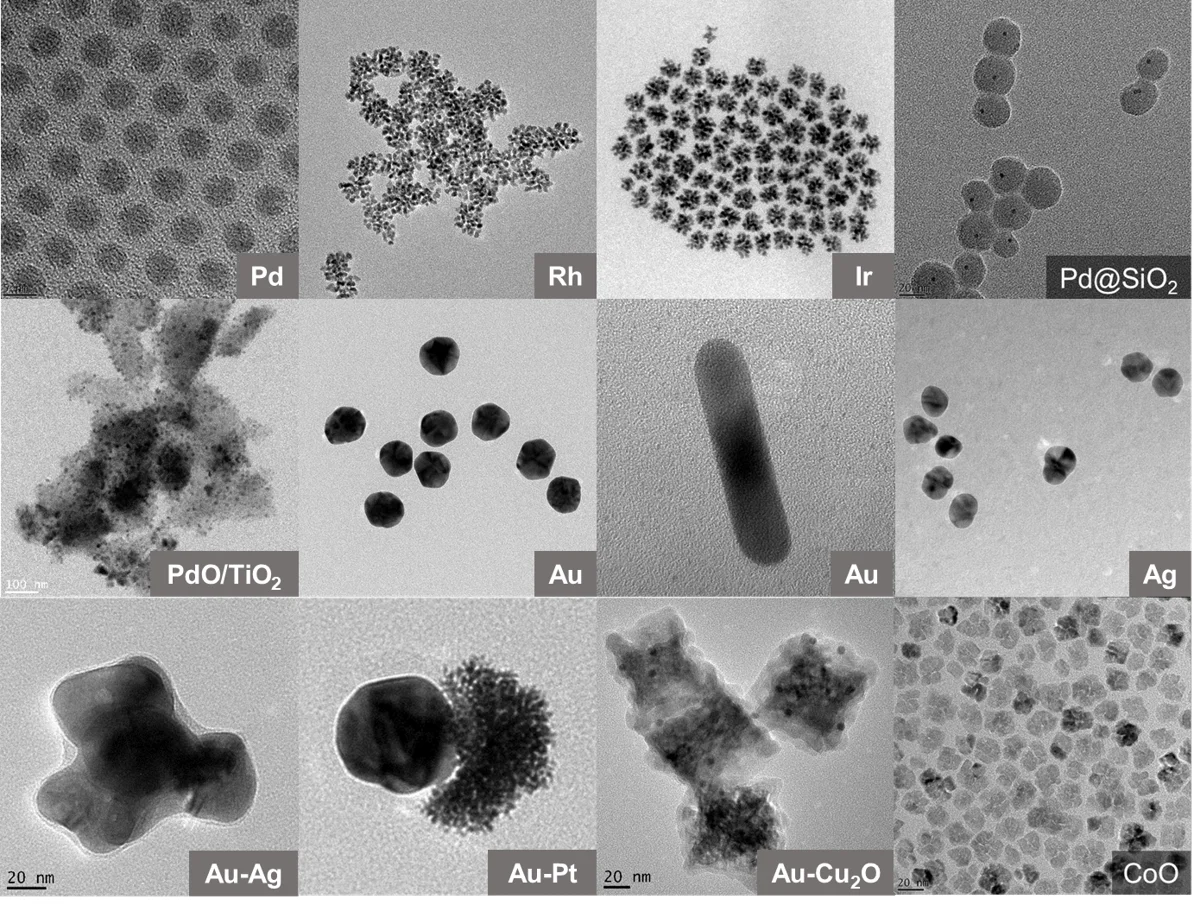
TEM images of synthesized nanoparticles: Pd, Rh, Ir, Pd@SiO₂, PdO/TiO₂, Au, Au nanorod, Ag, Au–Ag, Au–Pt, Au–Cu₂O and CoO

I am interested in the wet-chemical synthesis of diverse nanoparticles and in endowing them with new functionalities. Through nanoparticle synthesis, I aim to overcome the inherent limitations of bulk materials by harnessing phenomena that emerge at the nanoscale.

Research 2. Nanoparticle Growth Mechanisms
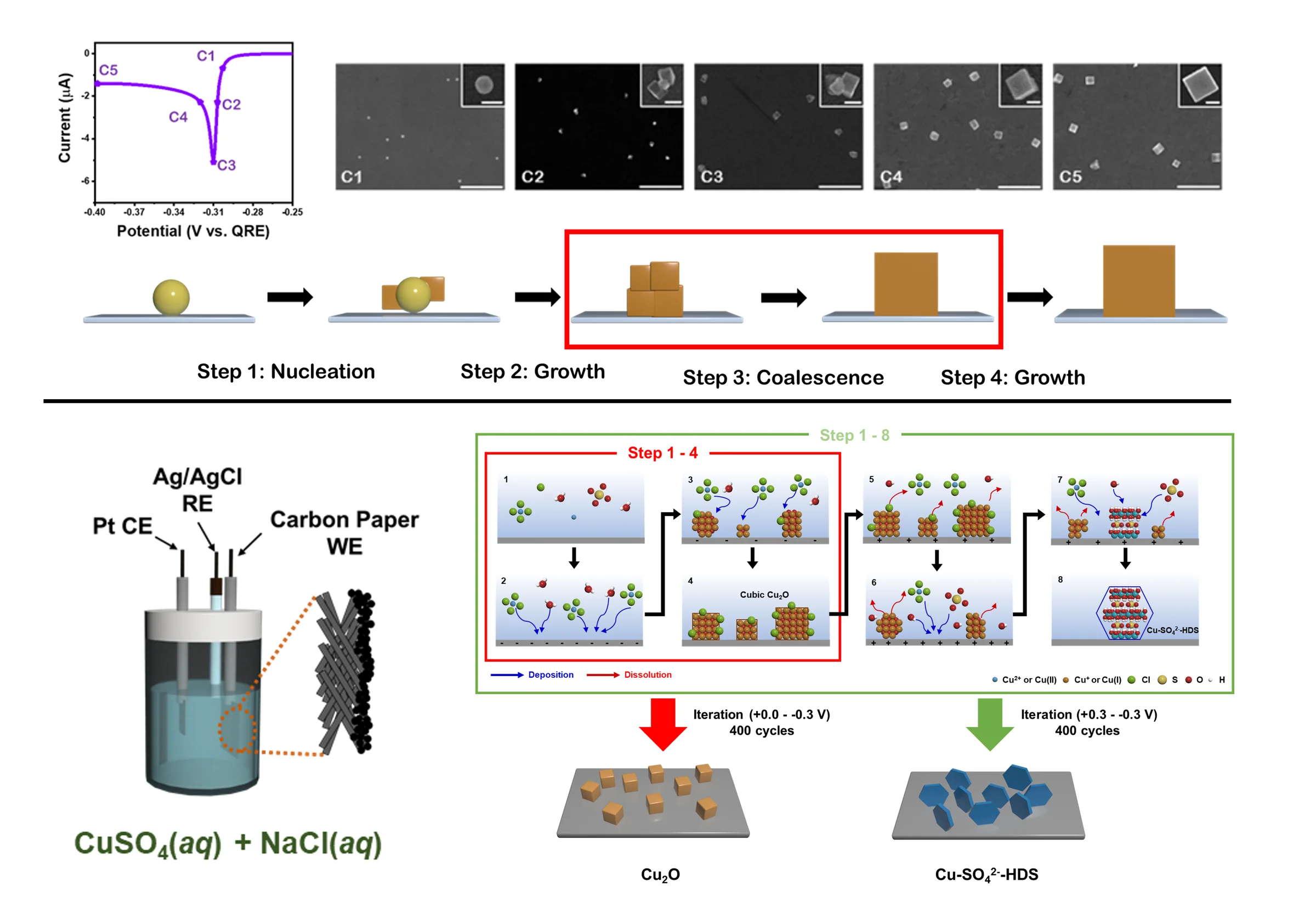
Growth mechanism of Cu-based nanostructures: cyclic voltammogram with SEM images at stages C1–C5; schematic of nucleation, growth, coalescence and further growth on a Au nanoparticle; three-electrode cell with a carbon-paper working electrode in CuSO₄ + NaCl; deposition–dissolution steps leading to cubic Cu₂O or Cu–SO₄²⁻ hydroxy double salt

Using real-time techniques, I analyze how nanoparticles grow and uncover the hidden mechanisms behind their formation. By revealing processes that have remained unknown, I aim to bring the vast possibilities of nanoscience into clearer view.

Research 3. Catalytic Applications of Functionally Designed Nanomaterials
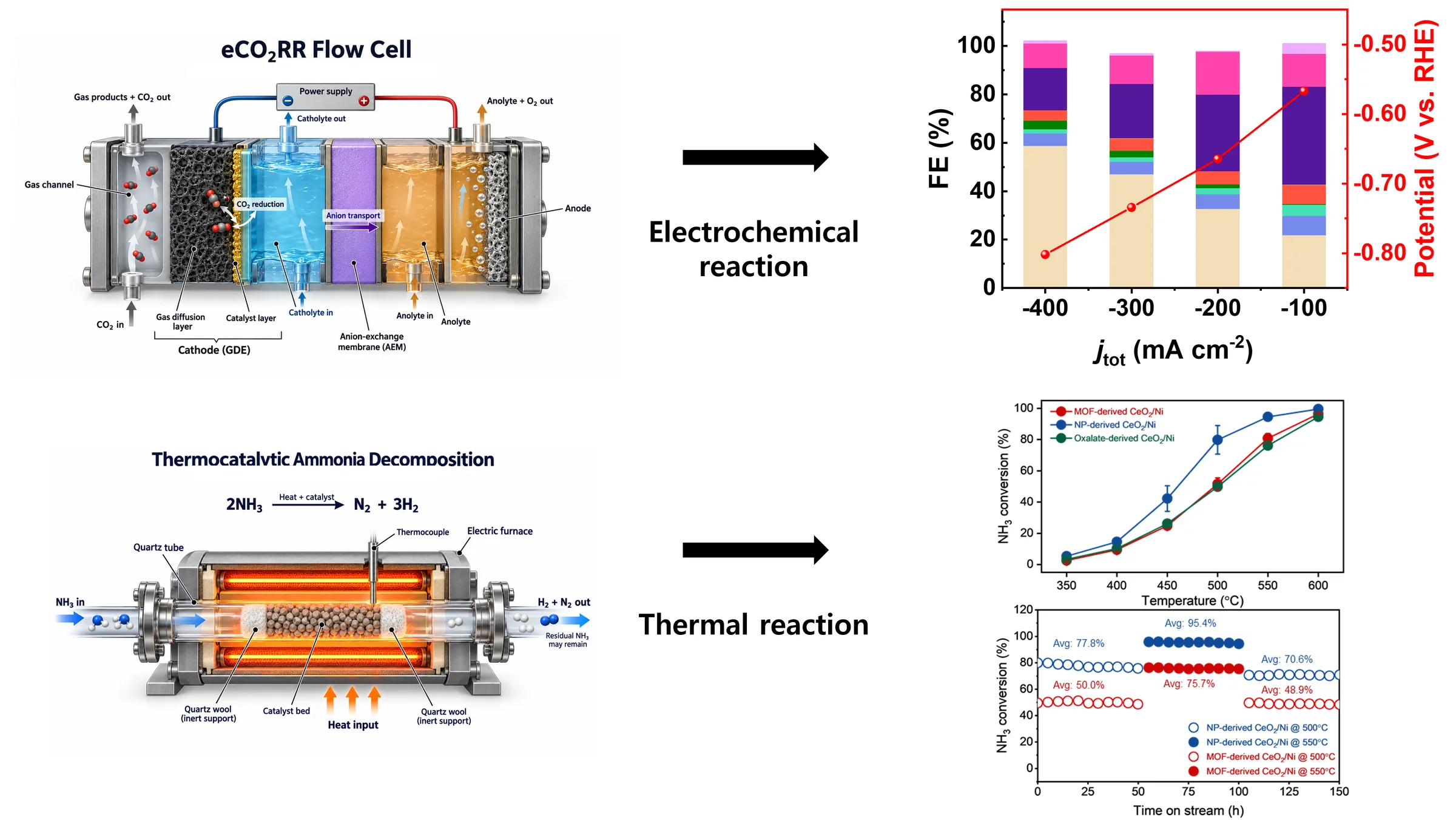
Catalytic applications: schematic of an electrochemical CO₂ reduction flow cell with Faradaic efficiency and potential versus current density; schematic of a thermocatalytic ammonia decomposition reactor with NH₃ conversion versus temperature and long-term stability of CeO₂/Ni catalysts

I apply functionally designed nanoparticles to a variety of practical catalytic reactions. For systems ranging from liquid-phase electrochemical CO₂ reduction to gas-phase ammonia decomposition, I develop synthetic strategies and nanostructures tailored to each reaction, with the goal of creating high-performance catalysts.